
Verbal reasoning tests check how accurately you can read a short passage and judge what it does and does not say. For most candidates the hardest part is the Cannot Say option, which catches out anything you assume from your own knowledge. Practise here with timed passages and feedback on every answer.

Four types of verbal question
Reading comprehension: True, False or Cannot Say
This is the format UK candidates meet most often. It is used in the SHL verbal reasoning test, in Cubiks (Talogy) tests, in Saville Assessment tests and in several other test systems.
You read a short passage as quickly as you can while still understanding it, then answer three statements about it: true, false or cannot say. Some tests word the options as yes, no or cannot answer.
Analogies
An analogy question is about how words relate to each other. You work out the relationship in one pair of words and find the pair that shares it, as in hand is to glove as foot is to sock.
Antonyms
An antonym is a word with the opposite meaning, such as hot and cold or loud and quiet. You see a word and several possible opposites, and you choose the correct one.
Deductive (logical) reasoning
You are given a set of premises and a conclusion, and you decide whether the conclusion is correct based on the premises alone.
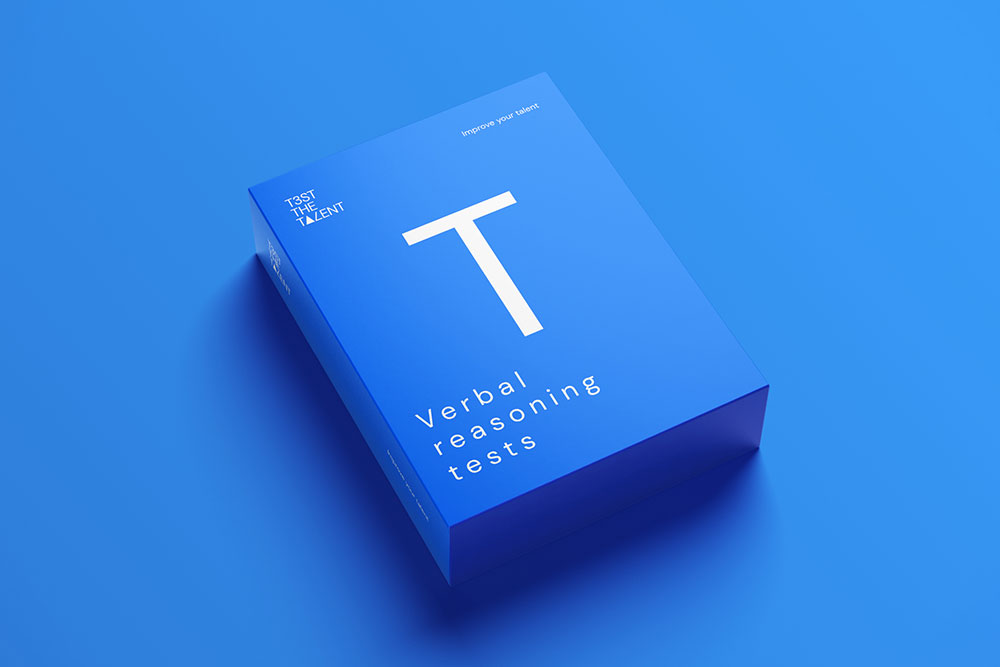
Free verbal reasoning practice test
This free test practises reading comprehension in the True, False or Cannot Say style. It contains 5 passages of 80 to 200 words each, with three questions per passage: 15 questions in all. Read each passage carefully, because the answers turn on small details of wording.
When you finish, you get feedback on every question, your total score and an indication of how that result would have placed you in a real recruitment test.
Why Cannot Say catches out so many candidates
A statement is true only if the passage says so or it follows directly from what is written. It is false only if the passage contradicts it. Everything else is Cannot Say, even when the statement is obviously correct in real life.
Most lost marks come from bringing in outside knowledge, or from reading some as all and may as will. Train yourself to point to the sentence that proves your answer. If you cannot find one, the answer is usually Cannot Say.
Where you will meet verbal reasoning tests in the UK
Verbal reasoning is a standard part of UK graduate recruitment, especially for law, consulting, banking, marketing and policy roles, where reading accurately under pressure is part of the job.
Civil Service and other public sector applications often include a verbal test, and you will find verbal sections in combined general ability tests such as SHL Verify G+. Many employers send it in the same invitation as a numerical test, so it is worth preparing for both together.

Test systems with verbal reasoning sections
How the test fits into the recruitment process
The usual UK sequence runs: online application, online tests, video or telephone interview, assessment centre, offer. The verbal test normally arrives by email soon after you apply, with a few days to complete it.
Your score is compared with a group of other candidates, and only those above the employer’s cut-off are invited to interview. At the assessment centre some employers repeat a shorter verbal test under supervision, so your preparation needs to hold up on the day, not only at home.
How to prepare for a verbal reasoning test
Treat every statement as a claim to be checked against the passage, not against what you know. Watch qualifying words such as some, most, only and always, because a single word often decides the answer.
Practise under a time limit, then go back through the feedback on each question to see exactly why an answer was wrong. Regular reading of dense writing, such as business news or reports, also helps you take in a passage faster.
The full verbal reasoning practice pack
- 47 practice test sets
- Plenty of verbal reasoning tests among them
- A training guide for verbal questions
- Detailed feedback on each result
- 90 days of access to every test
- Repeat tests until Cannot Say stops catching you out

Verbal reasoning tests: frequently asked questions
What does Cannot Say mean in a verbal reasoning test?
It means the passage does not give you enough information to decide whether the statement is true or false. It is the right answer even when you know from real life that the statement is correct, because only the passage counts.
Is the free verbal test similar to the SHL verbal reasoning test?
Yes. It follows the reading comprehension style used by SHL and several other publishers: short passages, each followed by three statements. The free test has 5 passages and 15 questions, with feedback on every answer.
Do I need to know about the subject of the passage?
No. Everything you need is in the passage itself. Using outside knowledge is one of the most common reasons candidates lose marks, so read only what is written.
What other question types appear in verbal tests?
Besides reading comprehension, some tests use analogies, antonyms and deductive reasoning questions, where you decide whether a conclusion follows from a set of premises. The full practice pack and its training guide cover these formats.
What is a good verbal reasoning score?
There is no single pass mark. Employers compare your result with a group of similar candidates and set their own cut-off for each role, so the score you need depends on the job you apply for.